


Hydrogen-Cooled Heat Shield
Revolutionizing orbital reentry with regenerative cryogenic cooling for reusable upper stages.

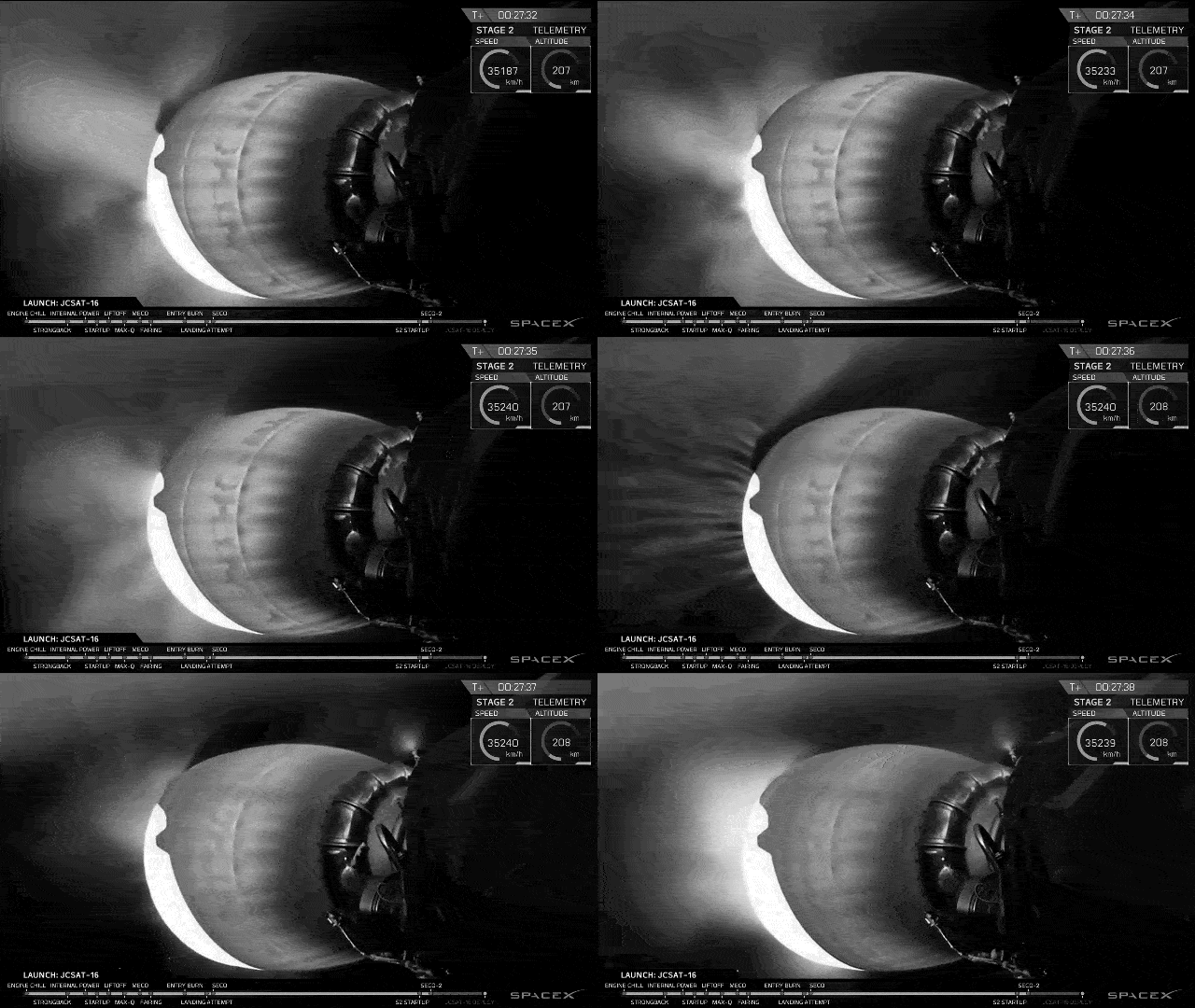
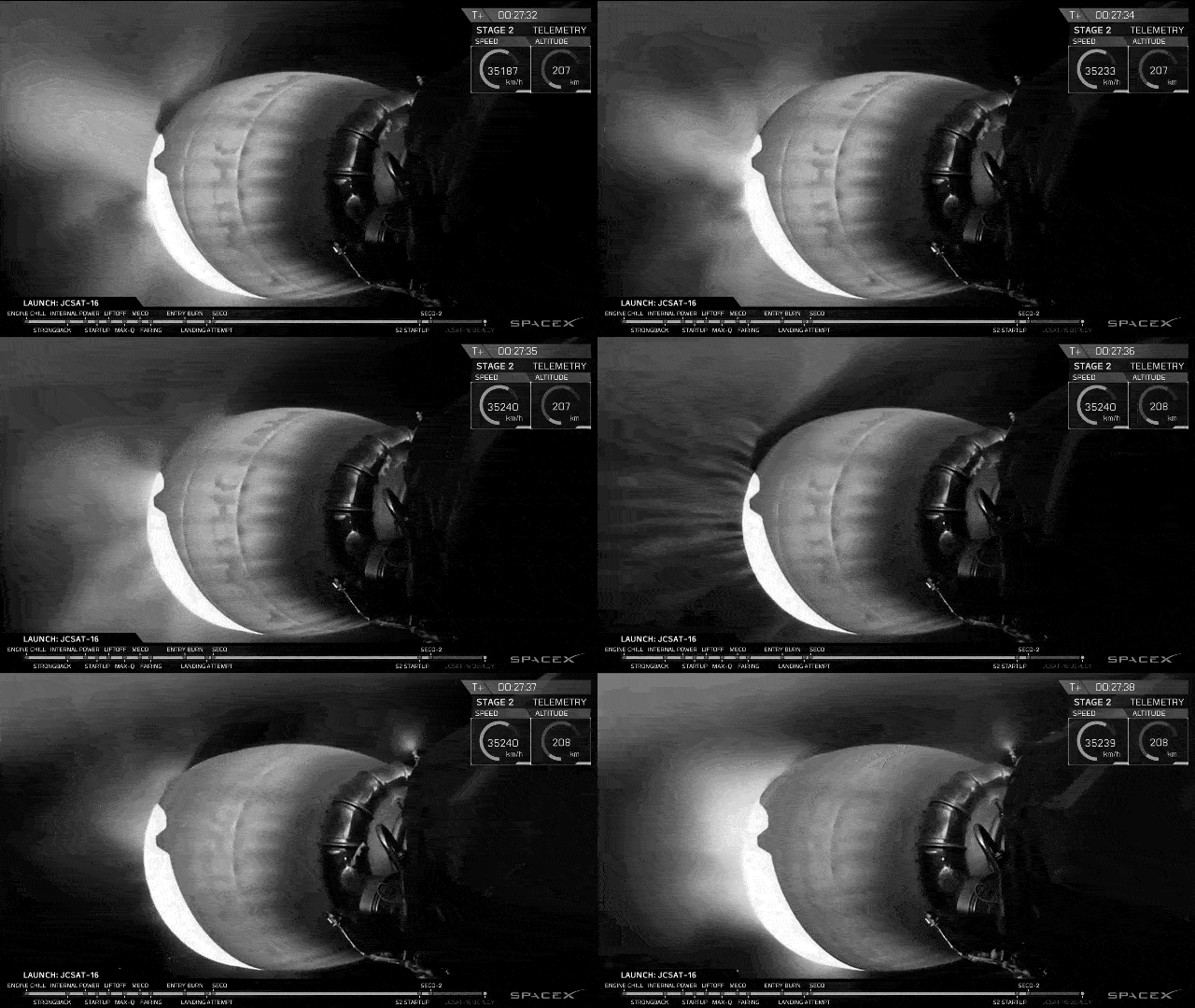
Render: Plasma sheath forming as regeneratively-cooled shield dissipates hypersonic heat
Orbital Reentry Reimagined
Traditional reentry vehicles rely on ablative or ceramic tile shields that degrade or require intensive refurbishment. Gatkul's regenerative hydrogen-cooled heat shield is a next-generation solution designed for orbital-class reusable vehicles. By actively circulating cryogenic hydrogen through shield-integrated microchannels, extreme heat is absorbed and diffused before damaging the structure — enabling safe, repeatable reentry.
How It Works
- 🌀 Active Cooling: Supercooled liquid hydrogen flows through microchannel coils embedded in the heat shield surface
- 🔥 Thermal Absorption: Reentry heat (~1500 to 2000°C) is absorbed by the hydrogen via conduction and convection
- 💨 Phase Transition: Hydrogen evaporates, carrying heat away from structural elements
- 🌫️ Boundary Layer Control: Ejected hydrogen may form a cooling gas sheath reducing convective heat flux
- 🔁 Reusable Design: No burn-through or residue; shields survive multiple reentries with minimal inspection
Advantages Over Conventional Shields
- ♻️ Fully Reusable: No erosion, melting, or replacement needed after reentry
- 📉 Lower Maintenance: Eliminates the need for tile inspections or ablator layering
- ⚙️ Integrated System: Shares cooling loop with LOX/LH2 propulsion systems for efficiency
- 🛰️ Precision Flight Control: Sustains sharper glide slopes and higher lift-to-drag ratios
- 🚀 Higher Payload Ratio: Lightweight design reduces TPS mass and increases usable mass to orbit
Applications in Gatkul Vehicles
- 🔵 Trishul Upper Stage: Human-rated reentry with high-frequency reuse
- 🟠 PADMA Crew Return Stage: Deep space return with extended heat loading
- 🔄 Orbital Refuelers: Precise aerobraking and capture maneuver survivability
Engineering Considerations
- 🛡️ Shield Composition: Carbon-carbon with hydrogen channels milled via EDM
- 📏 Channel Geometry: Optimized for even temperature distribution and minimal flow impedance
- ⚠️ Control Systems: Redundant sensors and venting valves to maintain flow balance
- 🧊 Fuel Synergy: Draws from vehicle's main hydrogen tank or an auxiliary boil-off buffer
Development Milestones
- 2023: Arc-jet testing of regenerative shield panels
- 2024: Subscale reentry demonstrator (high-alt balloon drop test)
- 2025: Full-scale shield on orbital testbed flight with Trishul
- 2026: Human-rated certification for crew return systems
Rethinking Reentry for the Reusable Era
Gatkul's regenerative hydrogen-cooled heat shield represents a leap forward in thermal protection system design. It supports our vision of rapid, reliable, and reusable launch systems that can operate with aircraft-like efficiency. As space becomes a place for habitation, industry, and exploration, reentry technology must rise to meet the challenge.